Perhaps Dr Jekyll and Mr Hyde? Or Dr David Smeaton and David the Aussie?
Nah, nothing that serious … but a fun note of sorts. Waaaaaaay long ago I used to own www.davidsmeaton.com … my name, my blog. But I let the domain go when I walked away from goofing around on the internet with websites and domains and such. My old domain (davidsmeaton.com) did the rounds of being picked up by random domain owners who try to monetise domains that have had some traffic. I think the longest one was some dodgy Chinese online gambling site! LOL
Anyway, I occasionally kept tabs on the domain. I was much happier with davidtheaussie.com anyway … but it was a fun side project to check on my old domain name (and my name) when the fancy struck me. Lo and behold … the domain was dropped by previous owners and not picked up again. It became publicly available and I snatched the domain up and redirected it here.
So now davidtheaussie.com and davidsmeaton.com both point to the same wacky place. Here!
Stress mounting quickly with due assignments — Check!
A literature review reading list 39 pages long — Check!
Rising expenses to cover book purchases — Check!
PhD officially started — Check!
Yes, as of August 2026, I’m a doctoral student. I’m studying via Griffith University and my doctoral thesis will be within educational pedagogy. Technically I’ll be a Doctor of Education … if I ever finish. I’ve made a positive start – I’ve handed in 2 assignments for the coursework that runs parallel to my main doctoral thesis. Fingers crossed on those! LOL My plan here (in this blog) is to try and be motivated enough to post regularly about my readings. It won’t get noticed, but it will keep me writing and re-stating it here will help me learn it all.
A quick “precis” to my thesis, which is still evolving and being sharpened to a point, is the use of AI (groans from the audience) in the classroom and how AI can potentially be a differentiation tool for teachers. I’m treading carefully here by ensuring that teachers don’t feel like they’re being put out of work or criticised. Teachers work their socks off for students. No denying that. But there’s a lot of evidence (citations coming soon) that differentiation doesn’t happen effectively in classrooms, which is mostly due to poorly targeted CPD, overworked teachers and underfunded schools … but I’m not touching that part, not even poking at it, for fear of provoking the pitchfork crowd. Instead, I’ll posit that AI can be a useful tool within the classroom to support teachers with bespoke differentiation tasks where AI can work with students one-on-one and focus on their specific, and often diverse, learning needs.
Phew! Now I’ll walk away and hope I don’t draw too much attention. But the thesis part is worth mentioning because I’ve pivoted from gaming, gamification and such (bye bye Triforce of Gamer Knowledge, hopefully I’ll return to you one day) to the more important evolution of AI and its role in education.
A few things worth noting – I might be making a few more regular jaunts to Australia to meet face to face with my supervisors and do some work on my thesis. Haven’t been home in about 11 years, so that’ll be a bit of a culture shock! And I’m going to have to get published as an academic before completing my thesis, and I’m going to have to defend my thesis. Blimey!
So this is just a signpost … um … post. The bell has rung, class has started and the path to Dr has been laid before me. Let’s see how it goes! 🙂
I’m using this post as a marker to create a line between the old and the new. The old – my blog that I started forever ago to attempt to coerce myself into starting my phd. The new – moving that blog to my current website, updating some of the dead links and images, and signalling my intention to return to the fray!
So … I’M BACK!!! LOL
OK, I’ve changed jobs and lifestyle commitments. As a result, I find myself thinking longingly about returning to my doctoral research. Every day I swim and the pool I swim in is quite deep at one end. I dive in and start my laps – but it’s that first dive that’s always the hardest, and feels deepest, and feels like the biggest commitment. That’s where I am right now – standing there staring at the blue water, seeing into its depths, and thinking about making the jump … academically speaking.
One thing I’m proud of, and hopefully this helps provide the motivation needed to dive back in, is that my academia profile has been quite a success. My profile has 1000 followers (not bad for an academic website). My Minecraft paper has 800 people bookmarking it. I get a fair bit of daily traffic and views on my work. Not bad for a guy who hasn’t given a flying toss about academia for a decade. I do regret not staying in the academic circle, but I had kids, life, wife and had moved to a new country. Too many balls to juggle with a doctoral paper to write as well.
So, with all that said, I have made contact with my Uni again, I’ve spoken with my former supervisor and we are currently looking at thesis proposals and supervisor options. Once that’s all sorted, I can submit my application and I will be off and running.
My thesis will hopefully incorporate a lot of the stuff I’ve covered previously, allowing me to delve more deeply into the more important parts – particularly participatory culture and tacit learning. I really want to try and get a good look at how people learn so much without even trying. I call it the “Pokemon Effect” (Nintendo, don’t sue me!) where people learn just by playing and having fun. A really good example of this was when I used to play World of Tanks. Despite having almost zero knowledge of tanks beforehand, I’ve since learned about tank names, countries of origins, gun sizes and velocities, as well as a myriad of other (relatively useless) knowledge about tanks that is completely worthless outside the parameters of the game. But that’s not really the point, the point is that I learned it through play and fun. Now apply that idea to AI image modelling through flux and stable diffusion. Imagine applying that to 3D modeling, STL files and 3D printing. How about survival games like Project Zomboid. There’s a million ways we can look at how people become domain specific experts in certain field simply by playing a game, or buying a 3D printer or attempting to make yourself a digital girlfriend using AI. Then add to that the knowledge we acquire when we remix that and use our knowledge to create new things like youtube channels, music, fan animations, and etsy stores. We learn the skills of creation, narration, commerce, art, music theory and all of the skills we need to create, remix and share our knowledge.
There ya go, PhD in the bag! I can see myself in my fancy hat walking up to the stage to the applause of my peers.
Ok, it’s not that simple, but that’s the gist of it.
Stay tuned. Keep an eye on this space. Yadda yadda. I hope there’s much, much more to come!
ABSTRACT: This research investigation focused upon whether creativity in project outcomes can be consistently measured through assessment tools, such as rubrics. Our case study research involved student-development of landscape design solutions for the Tennessee Williams Visitors Center. Junior and senior level undergraduates (N = 40) in landscape architecture design classes were assigned into equitable groups (n = 11) by an educational psychologist. Groups were subsequently assigned into either a literary narrative or abstract treatment classroom. We investigated whether student groups who were guided in their project development with abstract treatments were more likely to produce creative abstract design solutions when compared to those student groups who were guided with literary narrative interpretations. Final design solutions were presented before an audience and a panel of jurors (n = 9), who determined the outstanding project solutions through the use of a rubric, custom-designed to assess the project outcomes. Although our assumption was that the measurement of the creativity of groups’ designs would be consistent through the use of the rubric, we uncovered some discrepancies between rubric score sheets and jurors’ top choices. We subjected jurors’ score sheets and results to a thorough analysis, and four persistent themes emerged: 1) Most jurors did not fully understand the rubric’s use, including the difference between dichotomous categories and scored topics; 2) Jurors were in agreement that 6 of the 11 projects scored were outstanding submissions; 3) Jurors who had directly worked with a classroom were more likely to score that class’ groups higher; and 4) Most jurors, with the exception of two raters, scored the abstract treatment group projects as higher and more creative. We propose that while the rubric appeared to be effective in assessing creative solutions, a more thorough introduction to its use is warranted for jurors. More research is also needed as to whether prior interaction with student groups influences juror ratings.
A nation wide survey conducted last year discovered that teachers want more technology in the classroom. Access to computers seems to be high and a lot of teachers are using websites, images and other media in their daily classroom routine. However the problem, according to the survey, is that teachers feel they don’t have access to the “right” kinds of technology.
The biggest barrier to technology, unsurprisingly, was budget constraints.
The internet and computing (as technologies) are no longer tools, but have been integrated into human communication. They have become a part of the communication and is a part of meaning creation. Such technology is now more the environment than the tool.
Snyder asserts that young people are immersed in the digital age – where technology is the norm. Why then, she asks, are adults not learning from children how to integrate digital culture into schools? Data shows that 89% of students find school boring. A similar percentage are actively engaged in online communities.
The lure of online communities is the ability to create an identity and explore an online life with people from around the globe. Through imagination, young people are engaging in a “reality” where they are able to ask questions, foster social relations and develop knowledge.
Considering this reality of life outside the school, in which youth are actively and captivatingly engaged in social networks, creation, exploration, self empowerment and identity development, we begin to see that youth have both the motivation and the skills to connect and learn.
This is a motivation that is crucial to understanding and improving learning. Snyder claims that educators need to explore the implications for learning and digital citizenship which are beyond the classroom and school’s borders. This relates back to how young people see technology – as a part of the process of creating meaning.
The idea of studying technology in education (when technology is perceived as a learning device) is too limited. The growing importance of cyberspace reinforces the divide between schooling and society. Young people are creating new connections, networks and resources for learning that mirror 21st century life.
This is the thrust of Synder’s view – that technology has an integrated role in society. Following a constructivist theory framework, we are co-creating our realities together alongside technology.
Through this co-construction we give meaning to our realities, resulting in common language, symbols, values, behaviors, norms, and understanding. As learners, we make sense out of our world by analyzing and synthesizing our experiences in an attempt to give meaning. The elements that contribute to our sense making process are those parts of an event or experience with and through which we interact and act. In contemporary society, technology and media have become a part of this social interaction process.
Technology is changing our behaviour and perception, influencing the way we socially construct digital culture of meaning. We are shaping, and are shaped by, the technology we use.
Edit: Unfortunately I can’t post a direct link to the video (hello monetization!) so I’ll post a link to polygon.com’s article where the video is available.
This is one of the most amazing things I’ve ever seen done in Minecraft. Two friends, one a designer and one a programer, have decided to recreate the original Legend of Zelda within Minecraft. LoZ is, of course, a two dimensional game. But they have turned the game into a fully functional, 3 dimensional, exact replica of the LoZ map! While this is technically still a work in progress, the map is fantastic!
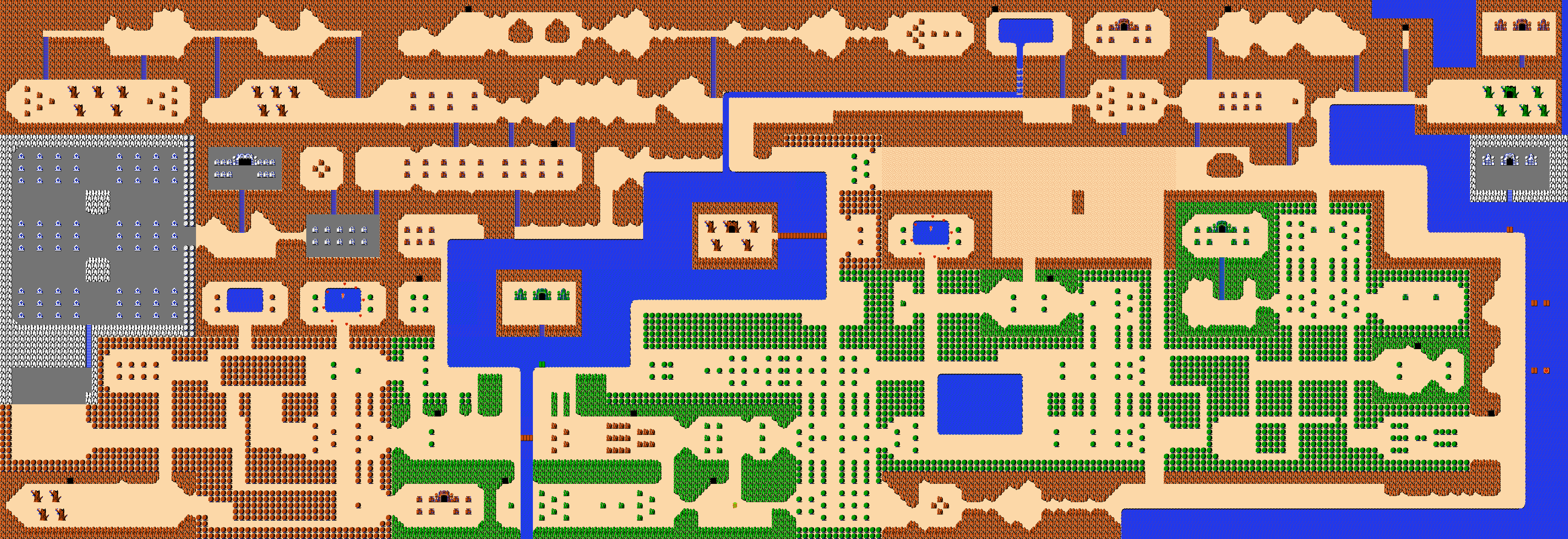
Let’s take a look at what the actual Nintendo Legend of Zelda map looks like.
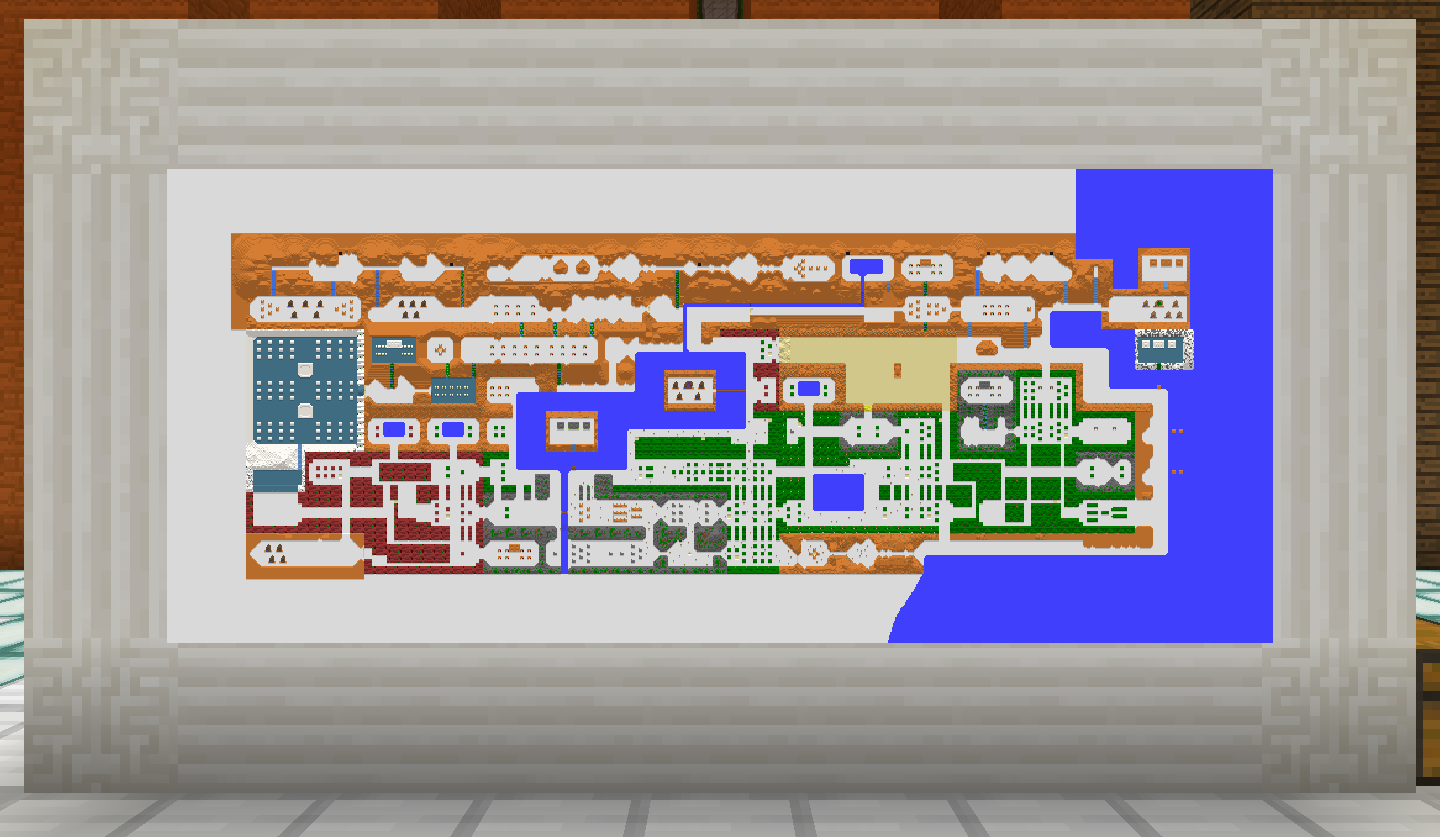
And here’s a look at the in-game map showing an overview of the world.
That’s some serious dedication … and keep in mind that buildings, mountains, trees and other in-game objects are three dimensional!
The true beauty of this project is exploring the limits of what Minecraft can do, as well as the incredible ingenuity required to make everything work. On a smaller scale, this has some exciting implications in the classroom. Historical events, real cities and other places can be recreated and characters or historical figures can be programmed to interact with players as they explore the map. Puzzles, hidden treasures and monsters can all be included to make the game interactive, realistic or just more fun!
The guys behind this project have done an incredible job and it’s worth keeping an eye on the project to see how it turns out. Here’s a link to their website and reddit discussion thread:
(Disclaimer, this post is more of a rant and less of an academic critique!) Every teacher has heard it hundreds of times – there’s this crazy rhetoric amongst school officials that “student to computer ratios” and “number of smart boards” are excellent metrics for evaluating how well a school has “incorporated” technology into the school environment. Yet, the reality inside classrooms is that the technology is rarely shared beyond ICT. English, math and science rarely use computers or labs. Smart boards are gathering dust in the corner of history classrooms. Teachers are too busy to rebuild their curriculum around technology and many are too afraid of technology to try and do more with it. Add to that the fact that technology breaks, becomes obsolete every two years and technical problems eat up valuable instruction time.
So it’s no surprise the European Commission has concluded 63% of 9 year old students are missing the digital equipment they need at school.
Between 50% and 80% of students in EU countries never use digital textbooks, exercise software, broadcasts/podcasts, simulations or learning games. Most teachers at primary and secondary level do not consider themselves as ‘digitally confident’ or able to teach digital skills effectively, and 70% would like more training in using ICTs. Pupils in Latvia, Lithuania and the Czech Republic are the most likely to have internet access at school (more than 90%), twice as much as in Greece and Croatia (around 45%).
Let’s be honest … this shouldn’t be a surprise. Currently teachers are severely undertrained for using computers or any technology in the classroom. Digital textbooks are few and far between, learning games are limited (too specific, too expensive, too outdated). Many teachers have no idea what a podcast is. Existing software is poorly used and rarely implemented. Technology is outdated and inadequately maintained. And I think that’s being quite generous! Decisions about technology in schools is being made by politicians and bureaucrats … and to make matters worse, there’s no consensus on what technology has value and how it can be applied in a standardised way across schools.
But to be fair, and taking a step back, this is not an easy problem to solve. By the time schools get around to agreeing on a strategy, the technology they are considering is already old. Teachers need to be trained and re-trained regularly. Technology needs to be maintained and updated every few months. Despite which, schools will still be years behind the cutting edge … while students are years ahead, already adept at using instagram, whatsapp, facebook and other new apps to communicate online.
However, one possible way forward is by looking closely at teachers. The teacher is the interface between the education system and the students. The teacher is the conduit. So it’s the responsibility of the education system to make sure teachers are able to do that job effectively. But how? Teacher training already has mandatory learning areas for would be teachers. They must learn about student welfare, learning methodologies, social justice, pedagogy and practice, and other areas that relate to effective teaching. Yet, very few universities have mandatory technology training for teachers – including how to use that technology in a classroom. And I’m not talking about smart boards. I’m talking about using Google groups as virtual classrooms. I’m talking about using iphone/android apps to communicate with students, record test scores, share resources. I’m talking about podcasting, documentary making, social media, RPG storylines and other technology areas being core parts of a teacher’s curriculum.
I’ll get a lot of hate for this, but if teachers can’t use technology, they probably don’t belong in a modern classroom. The trend now is BYOT – bring your own technology – and if teachers don’t know how to utilise the technologies they have available to them, then they are doing a disservice to students. Step 1 is start with rebuilding teacher training courses at university. Step 2 is less reliance on gimmicky technologies and more reliance on curriculum writing that takes advantage of student skills, personal technologies (smart phones) and access to hardware (computers) and software (apps) that will help students to achieve their goals.
Today’s luddite test: How many teachers use dropbox or cloud storage for their teaching resources?
If you don’t know who Paul Gee is (guru of game based learning!) or aren’t terribly familiar with his most recent works, there’s an excellent webinar called “Big G Game Based Learning”. Check out the webinar here:
http://home.edweb.net/big-g-game-based-learning/
Game-based learning should involve more than a game as a piece of software. It should involve designing what Arizona State University Professor James Paul Gee calls “Big G Games.” In the 50th webinar for the edWeb.net Game-Based Learning community, Gee discussed how Big G Games integrate a game as software with good interactional practices, good participatory structures, smart tools, and an emphasis on production and not just consumption. Often, out of school, such Big G Games involve what Gee has called “affinity spaces,” Internet spaces where people self-organize around a passion. Game-based learning leads naturally into a discussion of 21st Century learning and paradigm change for schools. View the webinar to find out how these “affinity spaces” are often part and parcel of even entertainment games today and how they create learning systems with properties that are quite different from schools as we currently know them.
Regardless of your views of education, learning, gaming, gamification, serious games or any other buzzword that is thrown around, games like Minecraft are proving themselves to win people over for their inherent “fun” factor and potential as a learning tool. Not everyone agrees that games can be useful for learning and sometimes that isn’t even the point that those of us who extol Minecraft’s virtues are trying to make.
One recent article considered how much fun Minecraft was and made the point that has no educational value, yet, still has value as a tool which promotes creativity. Again, that’s the whole point of Minecraft. Whether or not learning is directly implied, Minecraft is fun and has value that is (without a doubt) tangible. Minecraft is a creativity game that allows children to express their creative side through building and construction. It’s a cooperation game that encourages players to work together. It’s a planning game that forces participants to calculate what they need and how big things are going to get. It’s a challenging game that invites users to expand their horizons by building PCs, writing mods, participating in communities that develop Minecraft plugins. It’s an expressive game that inspires its fans to draw comics, paint pictures, write jokes and sing songs.
Minecraft is all of those things … and at the end of the day there’s no test. There’s no essay or assignment. There’s no teacher marking down grades on a rubric. There’s only fun … and through fun comes the learning.
When you play computer games you learn, whether you want to or not … and that’s a pretty good reason to play games!
*For the record: There is a Minecraft curriculum. Minecraft teachers write units and build curriculum around the game and teach it in their classrooms. But that’s not the point. Minecraft inspires people to play, and to learn, and to do amazing things. You don’t need a curriculum for that!
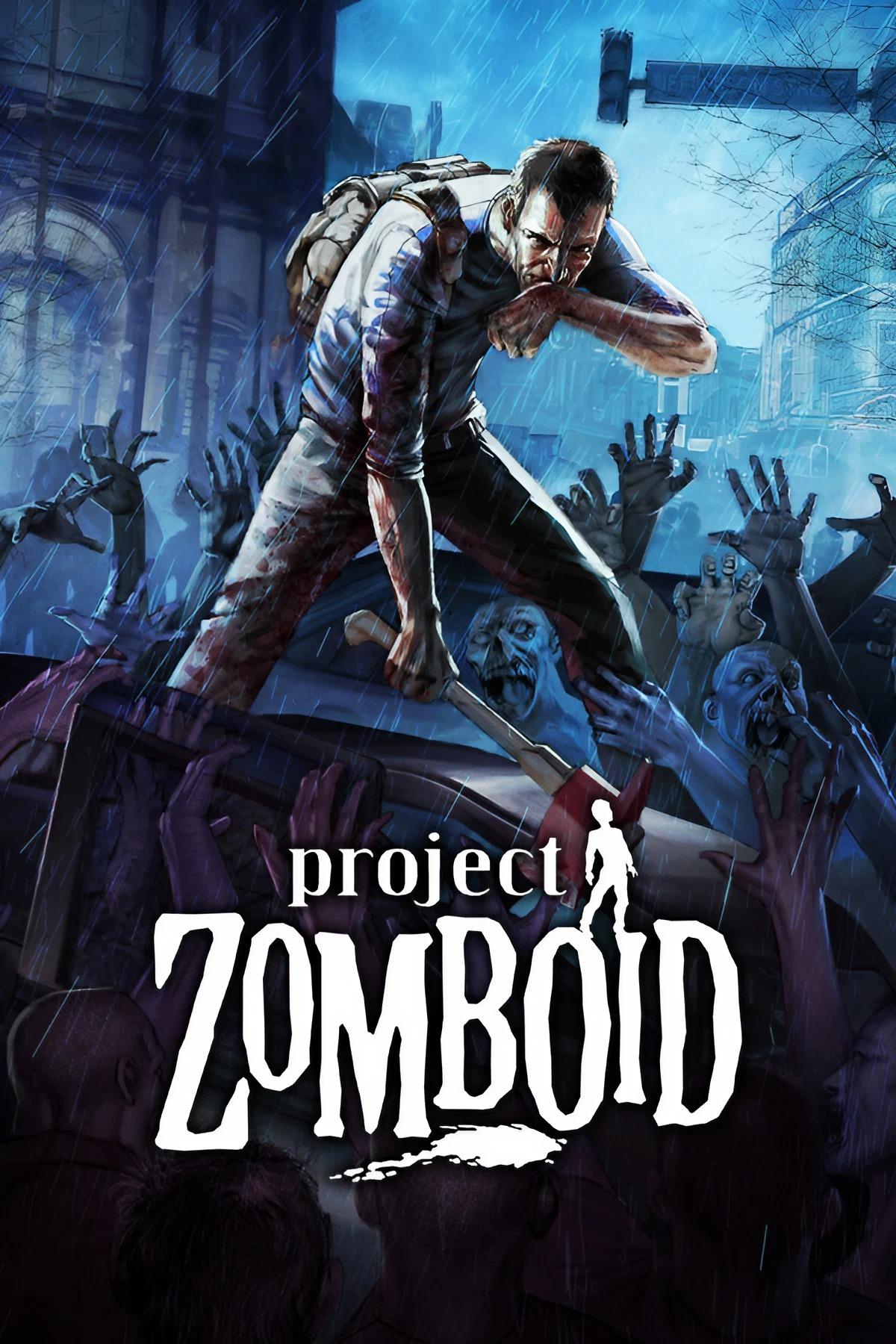
Before I start this post, I’m going to predict a regret to use such a large, vertical image. I bet it’s way too big (thus, impractical) for this page! LOL … Anyway, Project Zomboid is an alpha release game currently available through its website projectzomboid.com or on steam (http://store.steampowered.com/app/108600/). I’ve just started playing this game and, while I’m only doing beginner levels, I can see a lot of potential this game might have as a learning tool.
Wait … what? Zombie game? Learning tool?
Oh … yeah! Project Zomboid is a fun little isometric semi-open world based on Kentucky, USA. In the game you are the lone survivor (single player) in an apocalypse world overrun by the zombie hoard. Your job: survive. I’ve died … a lot! It’s awesome!
Where I see potential in this game links back to another post today about project based learning. Using a multiplayer server, it would be possible to set up situations where learners are forced to work together to survive. They would need to find shelter, amass a storage of food and weapons, fortify their safe house, explore the map and, of course, kill zombies. Even rationing out food, nails, weapons and jobs is a serious consideration. But it’s not as easy as it sounds. The game limits the player by making you scared when you see zombies (shooting accuracy lowers), fatigued when you run, injured when you carry heavy loads, hungry and tired. The player even becomes bored or depressed at night when there is little movement and nothing to do except wait until morning. While not ostensibly educational, it would be an amazing team building exercise. Players work together to survive. One player dies, they all start again!
Beyond the game, there are other opportunities to make custom maps, configure servers, make mods and participate in the community.
Game based learning requires thinking out of the box. Open world games like Kerbal Space Program and Minecraft have a more overtly educational nuance. However, that doesn’t mean first person shooters and zombie survival games can’t be educational too. The game isn’t the outcome it’s the medium. It’s just a matter of how you use it.
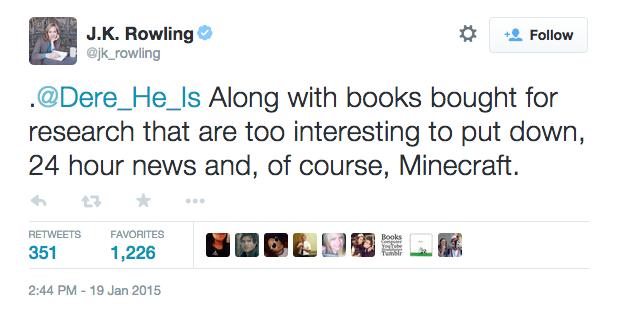
As a fun little follow up to a recent post about celebrities playing Minecraft, JK Rowling today tweeted that she’s working on a book but is distracted by other interests – including Minecraft. This, of course, caused a stir amongst the Minecraft fanbase. If I had to guess what Ms Rowling’s favourite activity is while she’s playing Minecraft, my guess would be … enchanting!